

The Employees’ Provident Fund Organisation (EPFO) has launched one of its most ambitious digital overhauls yet. Under the newly implemented EPFO 3.0 framework, the decades-old, paper-heavy retirement savings infrastructure is being replaced with an agile, high-speed digital ecosystem. Moving away from long settlement delays, the new system aligns India’s Employees’ Provident Fund (EPF) closer to modern banking.
For the over 30 crore registered members and 7 crore active subscribers, these operational changes fundamentally reshape how employees track, modify, and access their hard-earned retirement savings. Salaried professionals can now process self-certified online claims in record time, benefit from a quadrupled automated claims cap, and access funds via ordinary digital banking channels like UPI and specialized ATM withdrawals.

What is EPFO 3.0?
EPFO 3.0 is a comprehensive technical and structural upgrade built on a unified, cloud-based IT architecture. By partnering with the National Payments Corporation of India (NPCI) and 32 premier public and private sector banks, the Ministry of Labour and Employment has engineered a paperless platform capable of processing millions of transactions in real-time.
Historically, the EPF ecosystem functioned as a rigid, long-term locking mechanism. Accessing partial advances or final settlements meant navigating a web of physical forms, facing long processing queues, and depending entirely on employer sign-offs. EPFO 3.0 shifts this dynamic by removing structural bottlenecks. The core objective is clear: maintain the integrity of long-term retirement planning while offering rapid, reliable liquidity during critical life events.
5 Major System Changes Under EPFO 3.0
The transition to the EPFO 3.0 framework brings five fundamental changes to daily operations, claim settlements, and identity verification:
1. Instant PF Withdrawals via UPI
In a massive shift for public welfare systems, EPFO has integrated its digital back-end with the NPCI’s Unified Payments Interface (UPI) network. Subscribers can now check their eligible, withdrawable advance limit via the unified portal or the UMANG app, authorize the transaction using secure Aadhaar-based OTP verification, and receive funds directly into their verified, linked bank accounts within minutes.
2. Dedicated EPF-Linked ATM Cards and QR Cash
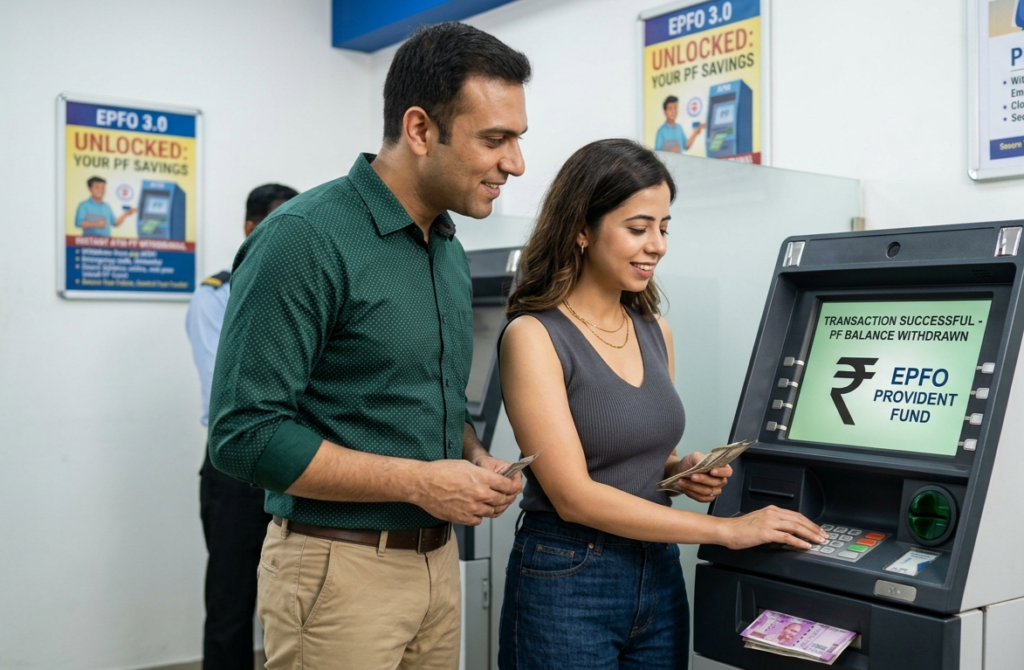
To provide quick cash access during emergencies, EPFO is rolling out specialized EPF-linked ATM cards. Members can use these cards at regular commercial ATMs to pull cash directly from their eligible partial-advance balance. Additionally, the platform supports cardless, QR-code-based cash withdrawals at UPI-enabled ATMs, bypassing the traditional 7-to-20-day manual settlement window entirely.

3. Auto-Settlement Limit Raised from ₹1 Lakh to ₹5 Lakh
The automated, algorithmic processing engine used to handle claims without physical human intervention has been significantly upgraded. Previously capped at ₹1 lakh, the auto-settlement limit has been raised to ₹5 lakh. For standard emergency claims like medical crises, education, or weddings, compliant accounts can see automatic processing completed in hours or up to three days.
4. Zero Employer Dependency for Profiles and Claims
A regular pain point for employees has been the reliance on corporate HR teams or past employers to approve basic details. EPFO 3.0 eliminates employer attestation for KYC-compliant accounts.
- Members can make critical profile changes (such as name corrections, date of birth adjustments, and gender updates) directly on the portal using self-certification and Aadhaar OTPs.
- Valid claims no longer require physical signatures or employer digital keys to proceed.
5. Aadhaar Face Authentication Integration
To counter identity theft, online scams, and biometric failures caused by worn fingerprints, the system integrates advanced Face Authentication Technology (FAT). Accessible through mobile applications like UMANG, users can complete biometric verification using a smartphone camera, making the verification process accessible for senior citizens and pensioners.
New EPF Withdrawal Rules, Limits, and Conditions
While EPFO 3.0 provides faster access to your money, the core rules governing why and how much you can withdraw have been adjusted to protect your retirement fund. The system balances accessibility with long-term financial security through targeted caps.
The 25% Retirement Lock-In Rule
To prevent accounts from being completely drained for casual spending, the government has instituted a strict safety net: a mandatory 25% of your total accumulated EPF corpus must remain locked in the account at all times during your active service years. Instant channels like UPI and ATMs are strictly restricted to a maximum of 75% of your available, eligible advance balance, keeping the remainder safe for retirement.

Streamlined Advance Categories
The old operational framework divided partial withdrawals into 13 distinct, confusing claim codes. The new rules simplify this structure by consolidating everything into three clear categories:
- Essential Needs: Urgent medical emergencies, serious illnesses, and unexpected financial distress.
- Housing Needs: Purchasing land, building a home, or paying down home loans.
- Special Circumstances: Major milestones like higher education and family marriages.
Increased Usage Frequency
Recognizing rising costs, the updated rules allow users to draw partial advances far more frequently over their career:
- Higher Education: Partial advances for children’s higher studies can be claimed up to 10 times during your total service history.
- Marriages: Advances to cover wedding expenses for yourself, siblings, or children can be claimed up to 5 times.
- Housing Upgrades: The continuous service requirement to claim a partial advance for home construction, buying property, or clearing a home loan has been standardized and reduced to just 12 months.
Operational Comparison: Old PF System vs. EPFO 3.0
To see how these changes improve the user experience, it helps to contrast the old operating model with the rules of the new ecosystem:
| Operational Feature | Legacy EPF Framework | New EPFO 3.0 Framework |
|---|---|---|
| Primary Withdrawal Channels | Physical/Online Form Submission (Form 31, 19, 10C) | Instant UPI Apps and Dedicated EPF ATM Cards |
| Average Settlement Window | 7 to 21 working days with frequent rejections | Minutes via UPI; maximum 3 days via Auto-Settlement |
| Auto-Settlement Ceiling | Capped tightly at ₹1 Lakh per individual claim | Expanded up to ₹5 Lakh for automated processing |
| Identity Verification Model | Physical documents, signatures, or fingerprint biometrics | Aadhaar-based OTP and Face Authentication Technology |
| Profile Correction Protocol | Joint declarations signed by employee and employer | Self-certification via Aadhaar-linked OTP verification |
| Data & Document Storage | Scattered physical records and siloed server logs | Centralized cloud infrastructure with DigiLocker utility |
| Housing Advance Eligibility | Required 24 to 36 months of non-stop contribution | Standardized down to a flat 12-month service history |
| Unemployment Exit Protocol | 75% after 30 days; remaining 25% after 60 days | 75% immediately; final 25% after 12 months |
Stricter Pension Rules (EPS-95 Updates)
While access to the Employees’ Provident Fund (EPF) side of your account has become more flexible, the government has tightened rules for the Employees’ Pension Scheme (EPS-95) to secure long-term retirement security.
Under the older regulations, an employee who lost their job could apply to withdraw their accumulated EPS pension wealth after just two consecutive months of unemployment. The new rules change this timeline significantly: pension fund withdrawals after a job loss are now restricted until you hit 36 months of continuous unemployment.
This change prevents employees from short-changing their retirement by dipping into pension funds during brief gaps between jobs. It ensures the pension pool remains intact to provide a reliable, lifelong monthly income after retirement. For older or differently-abled pensioners, the system now offers doorstep life certificate submissions via the India Post Payments Bank (IPPB), removing the need to visit physical offices.
EPF Tax Rules and Contribution Caps
It is vital to know that while EPFO 3.0 completely rewires the digital delivery system, it does not alter India’s core income tax laws regarding retirement assets. Understanding the tax landscape keeps you from losing your savings to unexpected tax deductions at the source.
- The 5-Year Continuous Service Rule: EPF withdrawals remain tax-free if you have completed five years of continuous service. This service history can span multiple companies, provided you transfer your old EPF balances into your current Universal Account Number (UAN).
- Early Withdrawal Penalties: If you pull out your funds before completing five years of continuous service, the withdrawn amount is added to your taxable income for that year and taxed at your regular slab rate.
- TDS Thresholds: For early withdrawals that cross ₹50,000, Tax Deducted at Source (TDS) is applied at a flat rate of 10%, provided your PAN card is linked to your account. If your PAN is not linked, the TDS rate jumps to the maximum marginal tax rate of over 30%.
- Statutory Caps: The statutory minimum wage ceiling for mandatory EPF enrollment stays at ₹15,000 per month, and the base interest rate is maintained at 8.25% per annum. Voluntary Provident Fund (VPF) expansions remain available for workers who want to contribute above the basic 12% employee cap.
Step-by-Step Guide: How to Get Your EPF Account Ready for Instant Withdrawals
Because EPFO 3.0 relies entirely on automated, algorithmic checking, even a tiny typo can cause the system to reject an automated transaction. Follow these clear steps to ensure your account is verified and ready for instant withdrawals:
Step 1: Confirm UAN Activation
Log on to the official EPFO Member Unified Portal. Check that your Universal Account Number (UAN) is fully active and that you can access your dashboard. If your UAN is not active, use the “Activate UAN” link on the portal by entering your registered identity details.
Step 2: Cross-Check Identity Matching
Open your profile dashboard and verify that your full name, date of birth, and gender match your Aadhaar card exactly, letter for letter. If you find a typo, use the online modification tools to request an instant correction via Aadhaar OTP validation.
Step 3: Complete KYC Document Seeding
Navigate to the “Manage” tab and click on the “KYC” sub-option. Ensure your Aadhaar card, Permanent Account Number (PAN), and current active bank account are all linked and show a verified status.
Step 4: Verify Bank Credentials and IFSC Details
Check that your current bank account number and corresponding Indian Financial System Code (IFSC) are correct in the system. If your bank went through a merger recently, update your records with the new IFSC to prevent electronic transfer failures.
Step 5: Secure Your Aadhaar-Linked Mobile Number
Make sure the mobile SIM card linked to your UAN and your Aadhaar card is active and near you. This phone number must be able to receive real-time SMS text messages, as every instant transaction, self-certification, and login requires an OTP security token.

Potential Security Challenges and Member Protections
While instant digital access brings incredible convenience, it also exposes users to modern digital risks. Transitioning to instant app-based channels and physical cards requires extra safety awareness from subscribers.
With the rollout of dedicated EPF ATM cards, users must look out for physical security risks like skimming devices, hidden cameras, and card-cloning scams at public ATMs. Similarly, moving to instant UPI access makes users potential targets for phishing attempts, fake support lines, and malicious links designed to steal digital credentials.
To protect your savings, remember these safety rules:
- Guard Your Tokens: EPFO representatives will never call, text, or email you asking for your UAN passwords, active Aadhaar numbers, or OTP security tokens.
- Verify the Source: Only input your financial information on verified, official platforms like the formal member portal or the government’s official UMANG application.
- Track Your Account: Check your digital passbook regularly and review the automated SMS alerts sent out by the system whenever a contribution is made or a withdrawal is triggered.
Conclusion
The launch of EPFO 3.0 is a turning point for social security administration in India. By combining the speed of the NPCI network with automated, hand-off processing, the system turns a slow, bureaucratic task into a modern digital utility. Salaried professionals no longer have to wait weeks or deal with complex HR approvals just to access their own money during an emergency.
However, users should remember that these updates are meant to provide speed and convenience, not to turn a retirement account into a regular checking account. The strict 25% safety lock-in and extended 36-month timeline for pension withdrawals show that the system’s main job is still protecting your post-retirement future. Keeping your UAN profile updated and your KYC records accurate ensures you can enjoy the full speed and security of this modern digital platform whenever an emergency strikes.
Disclaimer
The information provided in this article is for general informational and educational purposes only. Provident fund rules, operational guidelines, interest rates, and systemic features are subject to frequent updates and changes by the Employees’ Provident Fund Organisation (EPFO) and the Ministry of Labour and Employment, Government of India. Readers are strongly advised to check the official EPFO Member Portal, consult their corporate HR representatives, or review formal government notifications before initiating financial transactions, changing contribution settings, or submitting withdrawal claims.
When 3.0 launch date,
kindly launch it soon.