
If you reside in Tamil Nadu and possess a ration card, you have likely heard the urgent conversations in your neighborhood or seen news reports about a mandatory update due this February (2026). There is a significant amount of confusion surrounding this new requirement. Is it for everyone? Do I have to go to a government office? Can I just do it on my phone?
The government of Tamil Nadu is currently undertaking a massive drive to update the biometric data of ration cardholders. This process, known as e-KYC (Electronic Know Your Customer), is crucial for continuing your access to subsidized food grains and other benefits.
While the deadline pressure is real, the process is straightforward if you know what to do. This article will cut through the noise and provide a comprehensive, human-written guide on what this update is, why it is mandatory, and the practical steps—both offline and online—required to secure your family’s ration benefits.

What Exactly is the “Biometric e-KYC” Update?
In simple terms, the Civil Supplies and Consumer Protection Department wants to verify that every person listed on a ration card is a real, living person still residing in the state.
For years, ration articles were drawn by the head of the family or a designated representative. However, the new directive requires a shift from household-level verification to individual-level verification.
The Core Requirement:
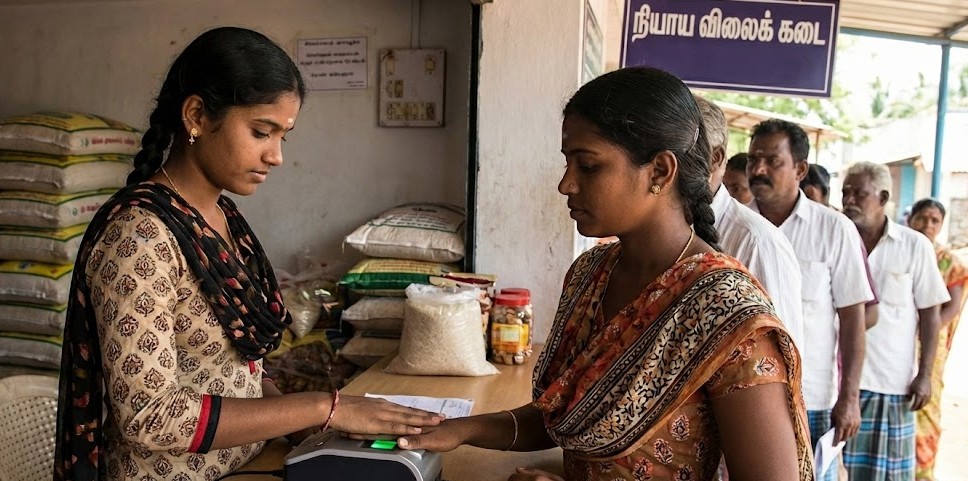
Every single member whose name appears on the ration card—from the eldest grandparent to children (generally above 5 years old)—must physically visit a location to have their fingerprint scanned on a biometric device. This scan is cross-referenced with their Aadhaar data to confirm their identity.
Who Is This Targeted At?
While the government aims to verify all cards eventually, the current urgent drive is laser-focused on:
- PHH (Priority Household) Cards: The standard “Rice Cards.”
- AAY (Antyodaya Anna Yojana) Cards: Cards for the poorest households.
- NPHH (Non-Priority Household) Cards: Even those getting commodities other than rice are being urged to complete this.
If you hold a “Rice Card,” consider this update mandatory to avoid interruptions in your supply.
Why Is the Government Pushing for This Now?
Eliminating “Ghost” Beneficiaries
The primary goal is to “clean” the TNEPDS (Tamil Nadu Electronic Public Distribution System) database. Over time, ration cards often retain the names of individuals who have passed away, moved abroad permanently, or migrated to other states years ago. These “ghost” entries act as a drain on resources. Biometric verification ensures subsidies only go to living, present individuals.
Enabling “One Nation, One Ration Card” (ONORC)
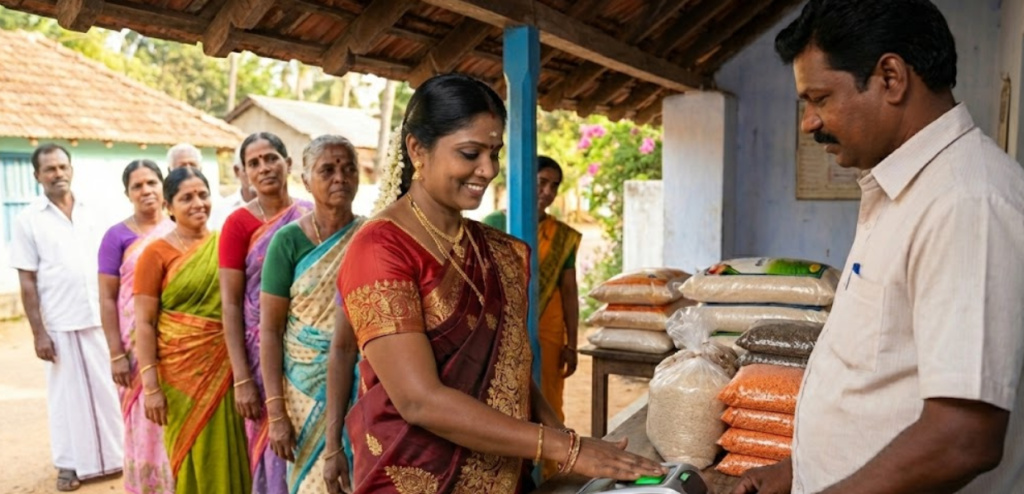
This is a significant benefit for migrant workers. By completing e-KYC and linking Aadhaar, a cardholder from Madurai working in Chennai—or even in Mumbai—can draw their share of rations from any fair price shop across India. Biometric verification is the technological backbone that makes this portability possible.
Preventing Fraud and Leakage
The update ensures that the subsidized rice, sugar, and other commodities meant for your family are not being diverted or siphoned off by unscrupulous elements using inactive cards.
The Honest Guide to Updating: Offline (The Primary Method)
Let’s be clear about the reality on the ground: The final step of e-KYC involves a physical fingerprint scan, which cannot be done on your smartphone at home.
You must visit a physical location equipped with the necessary biometric scanner (POS machine). Here is the step-by-step process and how to handle common hurdles.
Where to Go:
- Your Local Fair Price Shop (Ration Shop): This is the easiest option. You do not need to go to a Taluk office.
- Any Ration Shop in Tamil Nadu: If you are traveling within the state, you can walk into any nearby fair price shop to complete the verification.
The Step-by-Step Process:
- Gather the Family: Identify a time when all members listed on the card are available.
- Documents Needed: Bring your original Smart Ration Card and the original Aadhaar cards of all members for easy reference (though the ration card number is usually enough to pull up the data).
- The Scan: The shop employee will enter your card details into the Point of Sale (POS) machine.
- Individual Verification: One by one, each family member must place their finger on the biometric scanner.
- Confirmation: If the fingerprint matches the Aadhaar database, a green tick appears next to their name on the screen. The e-KYC for that member is complete.
- Repeat: Ensure every member completes this until the entire family list is verified.
Troubleshooting Common Real-World Issues:
- The “Worn Out Fingerprint” Issue: This is very common among elderly citizens or manual laborers whose finger ridges have worn smooth. The scanner may repeatedly fail to read their prints.
- Children’s Biometrics: If a child’s Aadhaar was made when they were very young (below 5), and they are now older, their biometrics (fingerprints and iris) might have changed. The ration shop scanner will likely reject these.
The Solution: In both cases mentioned above, the ration shop cannot help. The affected individual must first visit an Aadhaar Seva Kendra (ASK) or a permanent Aadhaar enrolment center (often in banks or post offices) to update their biometrics. Once the Aadhaar database is updated (which takes a few days), they must return to the ration shop for the e-KYC.
The Online Aspect: What You Can (And Cannot) Do
There is significant misinformation that the entire process can be done online. This is incorrect. You cannot scan your fingerprint using your phone screen for official government e-KYC.
However, the official Tamil Nadu Civil Supplies portal is highly useful for supporting tasks.
Official Portal Link: https://www.tnpds.gov.in/
What You CAN Do Online:
- Check Your Card Status: You can log in to see if your card is active and view the list of members.
- Ensure Initial Aadhaar Linking: Before doing e-KYC, your Aadhaar number must be listed against your name in the ration database. If it is missing entirely, you can upload a scanned copy of the Aadhaar card through the portal for approval by officials.
- How to access: On the TNEPDS homepage, look for “Beneficiary Login” or citizen services related to card corrections. You will need your registered mobile number to receive an OTP for login.
- Find Nearby Shops: The portal can help locate fair price shops in your vicinity.
What You CANNOT Do Online:
- You cannot complete the final biometric authentication to satisfy the current e-KYC drive requirement from home. A physical visit is mandatory.
Conclusion: Don’t Delay
While government deadlines sometimes shift, it is highly risky to ignore this one. The authorities are serious about streamlining the Public Distribution System. The passing of the February deadline could result in a temporary suspension of your benefits until the verification is complete.
Gather your family, grab your smart card, and visit your nearest ration shop. It is a short process that ensures your household’s food security continues uninterruptedly.