
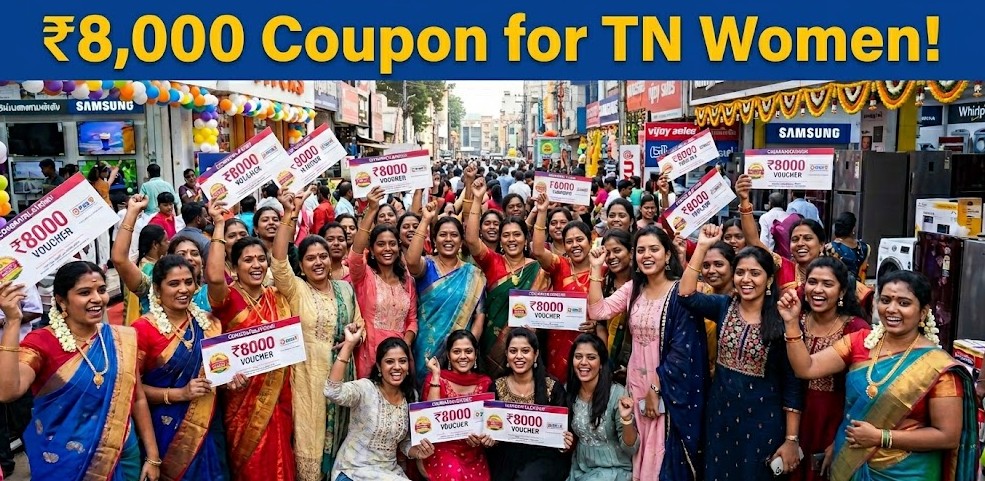
As the 2026 Tamil Nadu Assembly elections approach, the political atmosphere in the state has reached a fever pitch. On Sunday, March 29, 2026, Chief Minister MK Stalin unveiled the Dravida Munnetra Kazhagam (DMK) manifesto, a document he has confidently labeled the “Superstar” of the upcoming polls. Positioned as “Dravidian Model 2.0,” the manifesto is a sprawling 10-year vision that balances aggressive welfare schemes with long-term infrastructure goals. While the document covers everything from agriculture to high-tech “Global Cities,” the undisputed centerpiece—the “Heroine” of the manifesto—is the ₹8,000 “Illatharasi” coupon scheme for homemakers.
For content creators, policy analysts, and the general public, understanding the nuances of this manifesto is crucial. It represents a strategic move by the DMK to consolidate its base among women and rural voters while countering the populist promises of the opposition. In this comprehensive guide, we break down every major promise made in the DMK 2026 manifesto, with a special focus on the groundbreaking ₹8,000 appliance coupon.
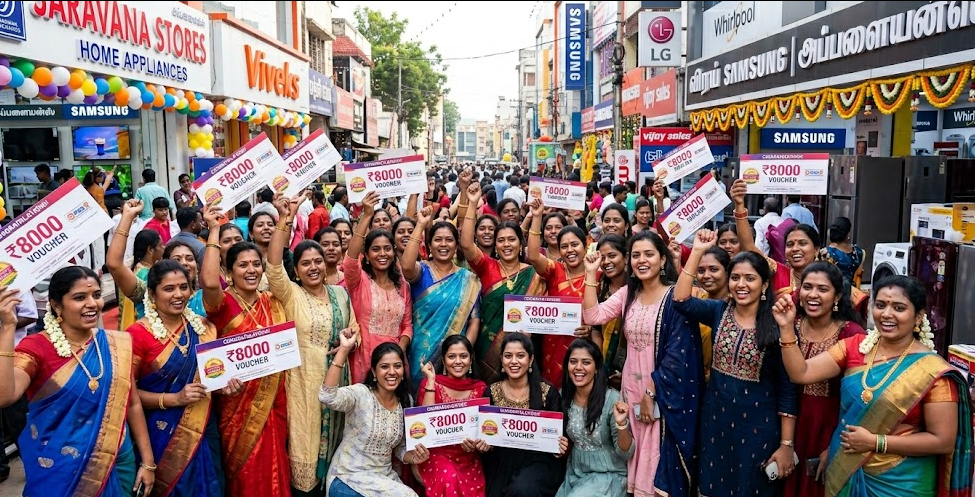
The ₹8,000 “Illatharasi” Coupon: Empowering the Queen of the House
The standout feature of the 2026 manifesto is the “Illatharasi” (Queen of the House) scheme. This initiative is designed to provide immediate, tangible relief to household budgets by facilitating the purchase of essential electronic appliances.
What is the Scheme?
Under this scheme, the DMK has promised a one-time financial coupon worth ₹8,000 to women who are the heads of their households. Unlike traditional “freebie” schemes where the government distributes a specific model of a product (like the free color TVs or laptops of the past), this coupon system offers flexibility. It allows beneficiaries to choose what they actually need from local retail stores.
Eligibility Criteria
The scheme is specifically targeted at non-income tax-paying families. By focusing on this demographic, the government aims to support the lower and middle-income strata that feel the pinch of inflation the most. The goal is to ensure that the “Queen of the House” has access to modern technology that reduces the physical labor involved in domestic chores.
What Can You Buy?
The ₹8,000 coupon can be used for the purchase of new appliances or the exchange of old ones. The manifesto explicitly mentions a wide range of eligible electronics, including:
- Large Appliances: Refrigerators, Washing Machines, and Television sets.
- Kitchen Essentials: Mixie-grinders, Induction stoves, and Microwave ovens.
- Daily Comforts: Electric fans and other small household gadgets.
This move is a direct political counter to the AIADMK’s previous promises of free refrigerators. By offering a coupon instead of a physical product, the DMK avoids the logistical nightmare of procurement and distribution while boosting local retail businesses.
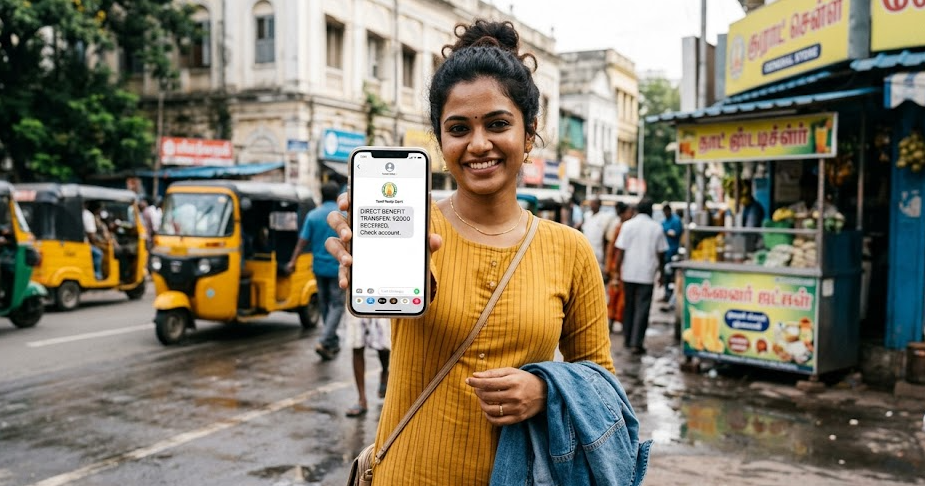
Transforming Women’s Financial Independence
The DMK’s focus on women extends far beyond the appliance coupon. The manifesto proposes a massive hike in existing welfare programs to ensure sustained financial security.
- Kalaignar Magalir Urimai Thogai Hike: The flagship monthly assistance scheme for women, which currently provides ₹1,000 to approximately 1.31 crore beneficiaries, is set to be doubled to ₹2,000 per month. This ₹24,000 annual grant is intended to provide a permanent safety net for women homemakers.
- Increased Education Grants: The Puthumai Penn (for girls) and Tamil Pudhalvan (for boys) schemes, which encourage higher education, will see their monthly grants increased from ₹1,000 to ₹1,500.
- Self-Help Group (SHG) Support: To foster entrepreneurship, the manifesto promises bank loans of up to ₹5 lakh without collateral for women-led SHGs.
Revolutionizing Education and Youth Welfare
The “Dravidian Model” has always prioritized education as a tool for social mobility. The 2026 manifesto takes this a step further with several key expansions:
- Breakfast Scheme Expansion: The highly successful Chief Minister’s Breakfast Scheme, which currently covers students from Classes 1 to 5, will be extended to cover students up to Class 8. This expansion will benefit an additional 15 lakh children, ensuring that hunger is never a barrier to learning in government schools.
- Digital Empowerment: In a major push for digital literacy, the DMK has pledged to distribute free laptops to 35 lakh college students over the next five years. This is aimed at bridging the digital divide for students from underprivileged backgrounds.
- Unemployment Assistance: Under the Naan Mudhalvan scheme, five lakh unemployed youth will receive specialized skill training for six months, accompanied by a monthly assistance of ₹1,100.
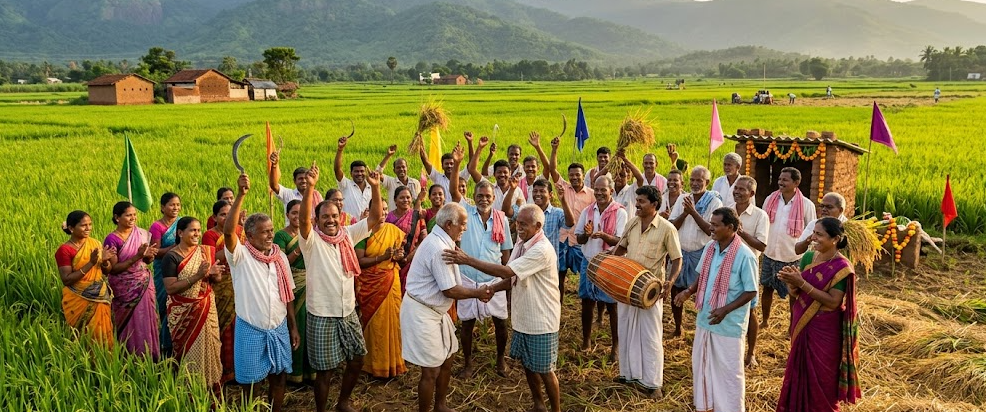
Agriculture: Free Power and Fair Prices
Recognizing that the agrarian sector is the backbone of Tamil Nadu’s economy, MK Stalin has introduced several measures to support the 20 lakh farmers in the state.
- Modern Pumpsets: Farmers currently receiving free electricity will be provided with modern electric pumpsets without meters. This modernization is intended to improve water efficiency and reduce maintenance costs for cultivators.
- Procurement Price Hikes: To ensure farming remains viable, the DMK has promised to increase the procurement prices for essential crops:
- Paddy: Raised to ₹3,500 per quintal.
- Sugarcane: Raised to ₹4,500 per tonne.
- Dairy Farming: For milk producers, the procurement price will be increased by ₹5 per liter. Additionally, 3,000 milk cooperative societies will be equipped with milking machines to ease the labor shortage in the sector.
Healthcare and Social Security
The manifesto emphasizes a “Health-First” approach, expanding insurance and specialized care.
- Insurance Coverage: The sum assured under the Chief Minister’s Comprehensive Health Insurance Scheme will be increased to ₹10 lakh, with the annual income ceiling for eligibility raised to ₹5 lakh. This effectively doubles the protection for millions of families.
- Social Pensions: Pensions for the elderly, widows, and unmarried women above 50 will be increased to ₹2,000 per month. For persons with disabilities, the pension will rise to ₹2,500, with a maintenance allowance of ₹4,000 for those with severe disabilities.
- Medical Infrastructure: A significant promise is the doubling of dialysis machines in all government hospitals to cater to the growing need for renal care across the state.
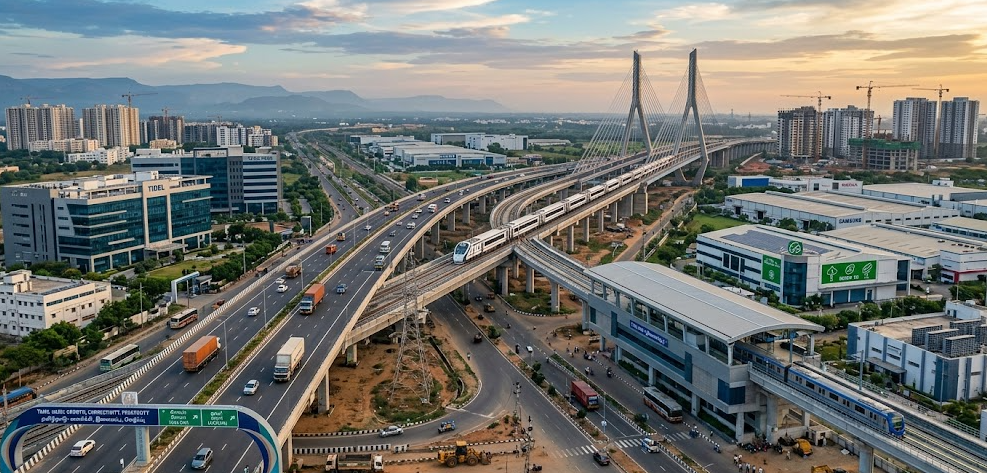
Infrastructure: Global Cities and 10 Lakh Houses
The DMK’s vision for 2026-2031 includes a massive facelift for Tamil Nadu’s urban and rural infrastructure.
- Hut-Free Tamil Nadu: Under the Kalaignar Kanavu Illam and other urban development schemes, the party has pledged to build 10 lakh new concrete houses. The goal is to make the state entirely “hut-free” by 2030.
- The “Global Cities” Project: To decentralize growth from Chennai, the manifesto proposes creating “Global Cities” near Tiruchi, Madurai, Coimbatore, and Salem. These hubs will be designed to attract international investments and high-tech industries.
- Transportation: A fleet of 10,000 new buses will be introduced over five years. The Vidiyal Payanam scheme (free bus travel for women) will continue, serving as a pillar of women’s mobility and economic participation.
- Connectivity: A ₹10,000 crore allocation has been set aside for rural road development, while urban areas are promised all-weather CC roads, improved footpaths, and the creation of 50 “Semmozhi Poonga” botanical gardens.
Economy and Employment: The ₹18 Lakh Crore Target
To fuel these welfare schemes, the DMK manifesto outlines a robust economic strategy. The party aims to attract ₹18 lakh crore in foreign direct investment (FDI) over the next five years. This influx of capital is expected to create 50 lakh new jobs, addressing the primary concern of the state’s youth.
Furthermore, the manifesto highlights the development of minor ports in Nagapattinam and Cuddalore, upgrading them to world-class standards, and establishing a dedicated cargo terminal in Thoothukudi to cement its status as the industrial capital of South Tamil Nadu.
Conclusion: The Political Impact of the “Superstar” Manifesto
The DMK’s 2026 manifesto is a masterclass in political strategy. By blending immediate “wallet-share” benefits like the ₹8,000 “Illatharasi” coupon and the doubled Magalir Urimai Thogai with long-term industrial and educational goals, the party is attempting to appeal to every segment of the electorate.
Critics may point to the fiscal challenges of implementing such wide-reaching subsidies, but MK Stalin’s response remains firm: the “Dravidian Model” has already proven that welfare and economic growth can go hand-in-hand. For the voters of Tamil Nadu, this manifesto represents a promise of a more comfortable, digitally-connected, and financially secure future. As the campaign unfolds, it is these specific numbers—₹8,000, ₹2,000, and 10 lakh houses—that will likely dominate the conversation at every tea shop and household in the state.
Stay Updated on Government Schemes
Navigating government manifestos and new welfare schemes can be complex. To get real-time alerts on the ₹8,000 “Illatharasi” coupon application dates, eligibility updates, and other Tamil Nadu government benefits, join our official WiseIndia WhatsApp Channel. We bring you verified, easy-to-understand news directly to your phone.
Hlo sir I am middle class family sir please help me sir