
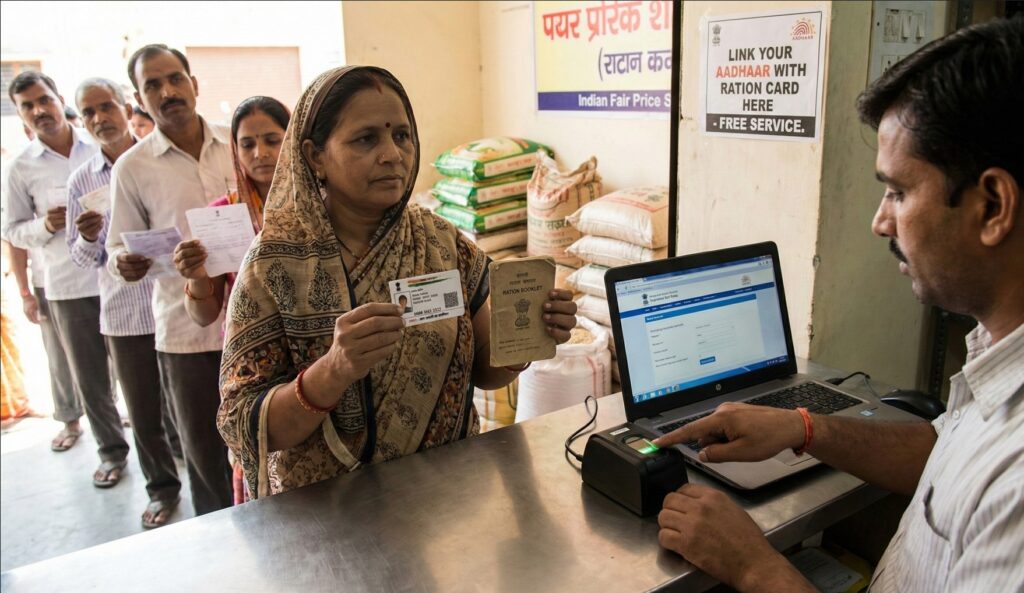
For millions of households across India, the Ration Card is more than just a document; it’s a lifeline. It ensures food security and provides a sense of stability. However, with the government’s push toward a “Digital India,” the process of maintaining this card has evolved. The most significant change in recent years is the mandatory linking of your Aadhaar Card with your Ration Card.
If you’ve been hearing about this but haven’t gotten around to it yet—or if you’re feeling a bit overwhelmed by the “tech” side of things—don’t worry. This guide is written for you. We’ll break down why this is happening, the benefits for your family, and a simple step-by-step walkthrough for both online and offline methods.
Why is the Government Asking for This?
Before we dive into the “how,” let’s talk about the “why.” You might wonder why another layer of documentation is necessary.
The primary goal of linking Aadhaar with Ration Cards is transparency. In the past, the Public Distribution System (PDS) faced issues with “ghost beneficiaries”—cards issued in the names of people who didn’t exist or families getting multiple rations they weren’t entitled to.
By linking these two documents:
- Duplicate cards are eliminated: This ensures that food grains reach the rightful, needy families.
- One Nation, One Ration Card (ONORC): This is perhaps the biggest benefit. Once linked, you can claim your rations from any Fair Price Shop (FPS) in the country. This is a game-changer for migrant workers and families who move for work.
- Preventing Leakage: Biometric authentication (your fingerprint or iris scan) ensures that no one else can claim your food grains.
What Documents Do You Need?
Before you start the process, gather these documents to avoid any last-minute hurdles. It’s always better to have them scanned (if doing it online) or photocopied (if doing it offline).
- Original Ration Card (and a photocopy).
- Aadhaar Cards of all family members (photocopies).
- Aadhaar Card of the Head of the Family (photocopy).
- Bank Passbook photocopy (in case your Ration Card isn’t already linked to your bank account).
- Passport-sized photograph of the Head of the Family.
Method 1: Linking Online (From the Comfort of Your Home)
If you have a smartphone or a computer and a decent internet connection, this is the fastest way. Please note that the specific website might vary slightly depending on your state (e.g., PDS portals for Maharashtra, West Bengal, Tamil Nadu, etc., are different).
Step-by-Step Online Process:
- Visit the Official Portal: Go to your state’s official PDS (Public Distribution System) or Food and Supplies Department website.
- Find the Linking Section: Look for a link that says “Link Aadhaar with Ration Card” or “E-KYC.”
- Enter Details: You will be asked to enter your Ration Card number and your Aadhaar number.
- Registered Mobile Number: Enter the mobile number linked to your Aadhaar. This is crucial because you will receive an OTP (One-Time Password).
- Verification: Enter the OTP sent to your phone.
- Submit: Click on the submit/finish button. You will usually receive an SMS notification once the request is successfully processed.
Method 2: Linking Offline (Through Your Local Ration Shop)
For many, the offline method feels more secure because you can talk to someone face-to-face. This is the best route if your mobile number isn’t updated or if you aren’t comfortable with online forms.
Step-by-Step Offline Process:
- Visit your Fair Price Shop (FPS): Head to the local ration shop where you usually collect your supplies.
- Submit Photocopies: Hand over the photocopies of the Aadhaar cards for all family members and your Ration Card to the shop owner.
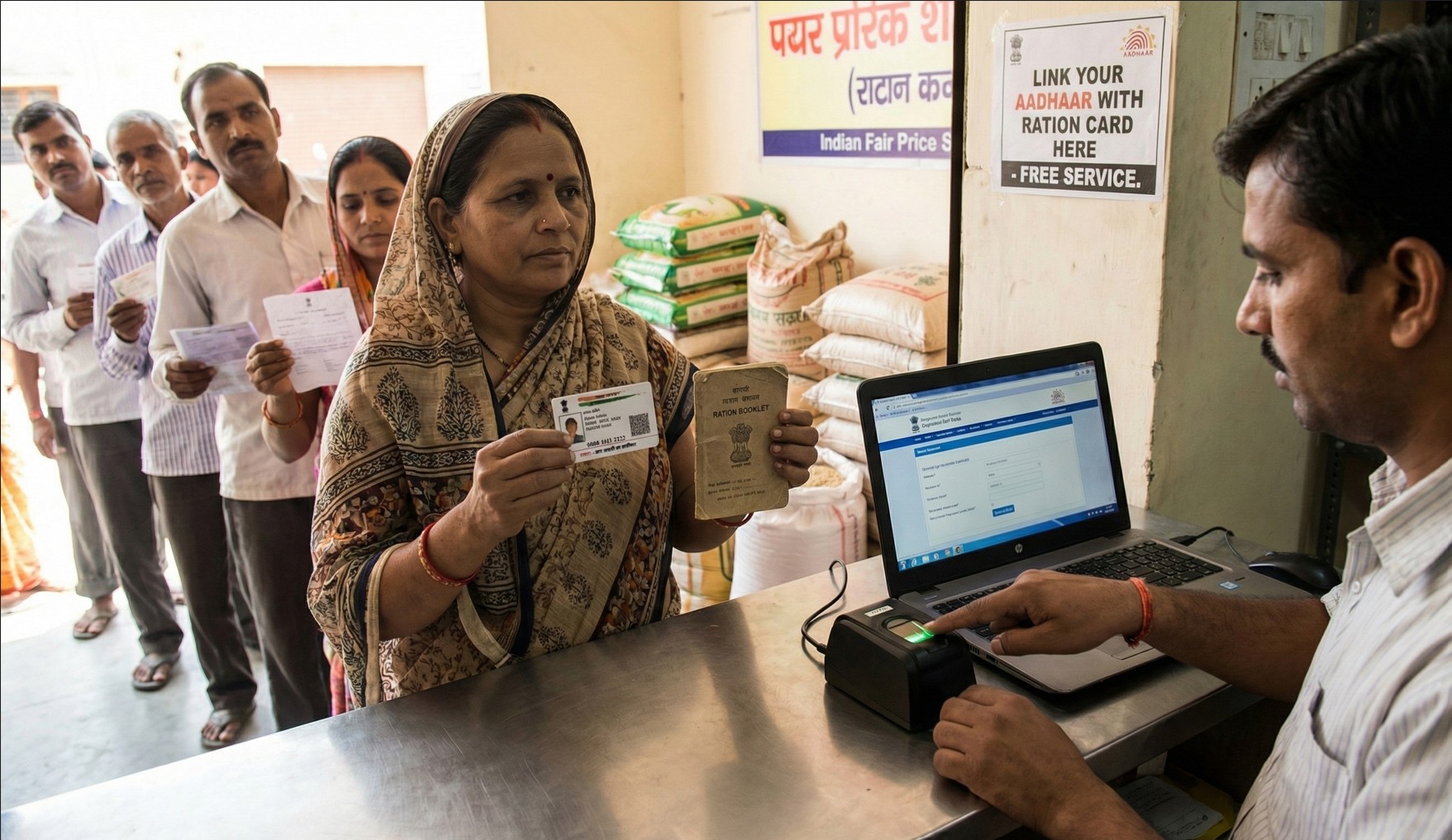
- Biometric Authentication: The shopkeeper will ask the Head of the Family to place their finger on a small biometric scanner (the E-PoS machine). This verifies that the Aadhaar belongs to you.
- Processing: Once the fingerprint is matched, the shopkeeper will submit your documents to the relevant department.
- Confirmation: You will receive an SMS on your registered mobile number once the linking is complete.
The “One Nation, One Ration Card” Advantage
We touched on this earlier, but it deserves a deeper look. Traditionally, a Ration Card was tied to a specific local shop. If you moved to a different city for a job, you lost access to your subsidies.
With Aadhaar linking, your Ration Card becomes portable. Whether you are in Bihar, Kerala, or Gujarat, you can walk into a Fair Price Shop, provide your Aadhaar/Ration details, perform a biometric scan, and get your allotted food grains. This empowers the workforce and ensures no one goes hungry just because they moved for a better life.
Common Challenges and How to Fix Them
Sometimes, things don’t go perfectly. Here are a few common issues people face:
1. Biometric Failure
Older people or manual laborers sometimes have “faint” fingerprints that the machines can’t read.
- Solution: Most centers allow for Iris Scanning (eye scan) or OTP-based authentication if the fingerprint fails multiple times. Ask the shopkeeper for these alternatives.
2. Name Mismatch
If the name on your Aadhaar card is “Rajesh Kumar” but your Ration Card says “Rajesh K.”, the system might reject the linking.
- Solution: You will need to get the name corrected on either document. It is usually easier to update your Aadhaar details at an Aadhaar Enrolment Centre to match your official records.
3. Mobile Number Not Linked
If you don’t have a mobile number linked to your Aadhaar, you won’t receive the OTP for online linking.
- Solution: Visit a nearby Aadhaar Seva Kendra or a Post Office to update your mobile number. It usually takes 24-48 hours to reflect in the system.
Frequently Asked Questions (FAQs)
Q: Is there a fee for linking Aadhaar with a Ration Card? A: No. The government provides this service free of cost. Do not pay any “service fees” to shopkeepers or middlemen.
Q: What is the last date for linking? A: The government has extended the deadline multiple times. As of now, it is mandatory, and failing to do so might lead to your card being deactivated. It is best to do it as soon as possible.
Q: Do I need to link the Aadhaar cards of my children? A: Yes. To ensure the full quota of food grains for your family, the Aadhaar numbers of all members listed on the card should be linked.
Final Thoughts: A Step Toward Security
Linking your Aadhaar to your Ration Card might feel like another “to-do” list item, but it’s a vital step in securing your family’s future. It protects your benefits from being stolen, ensures you can get food anywhere in India, and helps the country build a fairer system for everyone.
If you haven’t done it yet, take an hour this week to visit your local ration shop or log on to the state portal. It’s a small effort for long-term peace of mind.
Wait! Do you have a Ration Card yet? Before you can link your Aadhaar, you must have a valid Ration Card. If you are a new resident or haven’t applied for your card yet, don’t worry—the process is now 100% online. You can follow our Simple Guide to Applying for a New Ration Card Online (2026) to get started first.